CLINICAL
GLP-1 WEIGHT LOSS PATHWAY
Kate Monteith-Ross outlines how practitioners can support skin health, tissue recovery, and patient outcomes during rapid GLP-1 weight loss.
INTRODUCTION
GLP-1 receptor agonists have transformed the landscape of weight management across the UK and internationally.1-2
While the cardiometabolic benefits are well documented3 , their rapid adoption has revealed complex aesthetic implications that bring new clinical responsibilities for aesthetic practitioners.
A growing cohort of patients seek cosmetic care while undergoing or following GLP-1 therapy often without comprehensive medical oversight presenting both opportunities and challenges in aesthetic practice because of ‘rapid weight loss’.4
When prescribed appropriately – particularly for patients with obesity, insulin resistance, or cardiometabolic disease - GLP-1therapies can be profoundly health-restorative.¹
However, in individuals without underlying metabolic dysfunction who pursue rapid or extreme weight loss, these same mechanisms may trigger a different physiological response .
Accelerated fat and lean mass loss, nutrient depletion, hormonal shifts, and altered inflammatory signaling can create a cascade of unintended consequences, including muscle loss, skin laxity, impaired wound healing, and accelerated features of ageing.5
It is therefore not the medication itself that warrants concern, but rather the context, pace, and purpose of its use, highlighting the need to distinguish therapeutic metabolic optimisation from aggressive weight-loss strategies and to carefully consider the long-term implications for tissue health, recovery, and biological ageing.6
THE BIOLOGICAL IMPACT OF RAPID WEIGHT LOSS
Studies demonstrate that rapid weight loss can lead to deficiencies in essential macro and micronutrients including protein, iron, B vitamins, and trace elements particularly when intake falls below basal requirements6 , contributing to lean mass loss across skeletal muscle and connective tissue7 and negatively impacting metabolic rate, wound healing, and dermatological health.8 Concurrent rapid reduction in subcutaneous adipose tissue, particularly in the face and extremities, results in volume loss , skin laxity, and the ageing phenotype often termed “Ozempic face,”9 driven not by direct pharmacological effects but by fat loss exceeding the adaptive capacity of dermal structures.10 This is further compounded by reduced adipose-derived stem cell activity, impaired fibroblast signaling11 , diminished collagen and elastin synthesis12 , and decreased nutrient availability for dermal matrix maintenance7 , collectively creating a physiological environment in which skin elasticity, hydration, and regenerative capacity are compromised.9
RISKS OF INADEQUATE MEDICAL OVERSIGHT
The aesthetic industry has witnessed patients accessing or self-starting GLP-1 therapies without appropriate healthcare supervision.4. This practice increases risk which can adversely affect skin health and treatment outcomes.13 Therefore, aesthetic practitioners must ensure clinical liaison, nutritional evaluation, and ongoing medical monitoring for patients on weight-loss pharmacotherapies.14
PHASE 1: STABILISATION
Early intervention should prioritise restoration of the skin barrier, which is often compromised as metabolic and structural changes occur in parallel8 : it is essential for optimising healing, reducing risk, and preparing for regenerative treatments.8
Accelerated loss of subcutaneous fat reduces dermal support and alters adipocyte-derived signaling that normally contributes to barrier integrity, immune modulation, and epidermal lipid synthesis.15 When combined with reduced caloric and protein intake, micronutrient depletion, and shifts in inflammatory mediators, this can impair keratinocyte function, disrupt the stratum corneum, and increase TEWL resulting in skin that is fragile, dehydrated, slow to repair, and more vulnerable to irritation and injury.8 Addressing barrier dysfunction is essential to improve skin resilience and comfort, and to stabilise the cutaneous environment before introducing more advanced interventions.8
A targeted topical strategy is essential particularly as rapid weight loss and nutritional compromise reduce epidermal lipid synthesis and impair barrier function. Replenishment of lipids is critical, including ceramides (NP, AP, EOP), cholesterol15 , and linoleic acid–rich free fatty acids, ideally delivered in a physiological ratio to restore lamellar structure, improve corneocyte cohesion, and reduce TEWL. Concurrent use of barrier-safe humectants such as glycerin, hyaluronic acid, and panthenol supports hydration while promoting repair and reducing inflammation. Anti-inflammatory and barrier-supportive actives including niacinamide (2–5%), colloidal oatmeal, allantoin, and beta-glucans further enhance epidermal resilience, modulate inflammatory pathways, and support microbiome balance. Adjunctive use of skin-identical and reparative agents such as squalane, phospholipids, and ectoin contributes to restoration of membrane integrity, protection against cellular stress, and optimisation of the cutaneous healing environment.16-23
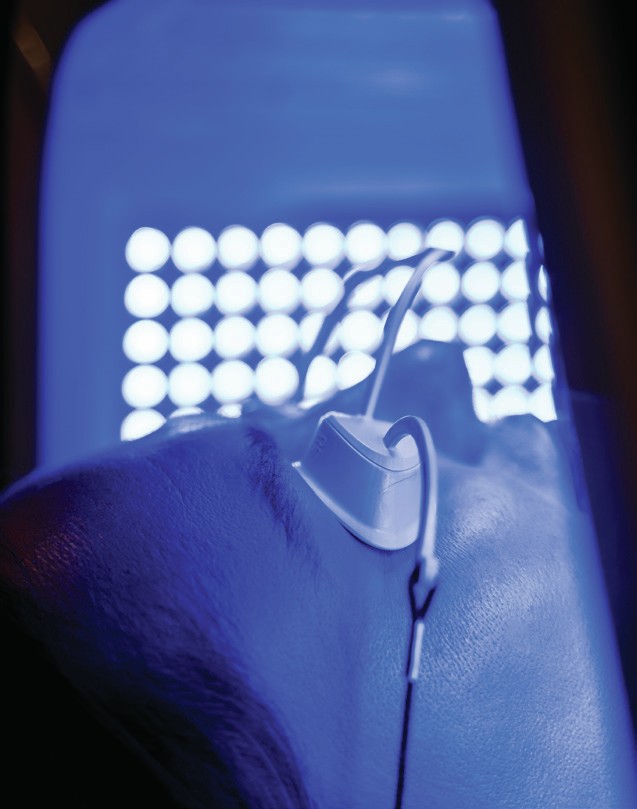
LED Phototherapy
Dermalux Tri-Wave MD uses a combination of three clinically proven wavelengths: Blue (415 nm), Red (633 nm), and Near-Infrared (830 nm) to stimulate tissue at multiple depths and modulate key cellular processes for skin health.11 Red and near-infrared wavelengths improve cellular energy production by stimulating mitochondrial cytochrome c oxidase, increasing ATP synthesis, and enhancing keratinocyte proliferation and differentiation.24 This optimises stratum corneum repair, lipid synthesis, and barrier resilience, which are challenged when fat loss reduces adipocyte signaling and disrupts epidermal homeostasis.25 Wavelengths penetrate the dermis, upregulating fibroblast activity, collagen gene expression, and elastin synthesis.11 Dermalux stimulates neocollagenesis and elastogenesis, improves dermal thickness, and enhances tissue elasticity, critical for counteracting skin laxity and restoring structural integrity. Near-infrared light increases microvascular perfusion and lymphatic flow, delivering oxygen and nutrients efficiently while accelerating waste removal24 supporting tissue recovery and reduces edema and stagnation, fostering an optimal environment for cellular repair and regeneration whilst modulating immune responses.25
PHASE 2: ARCHITECTURAL SUPPORT:
The focus shifts toward preservation and regeneration of the dermal matrix as the skin’s structural integrity relies heavily on collagen, elastin, and glycosaminoglycan networks, which can be significantly affected by rapid reductions in adipose tissue and shifts in metabolic signaling.26
In addition to mechanical changes, caloric restriction and altered protein intake during weight loss can compromise amino acid availability necessary for collagen synthesis, further accelerating dermal thinning if not addressed proactively. Therefore, this phase prioritises strategies that maintain fibroblast activity, enhance collagen production, and preserve dermal density while minimising inflammation or excessive tissue stress.
Collagen synthesis depends on adequate availability of key amino acids: glycine, proline, and lysine, alongside vitamin C, zinc, and copper.27 GLP-1 patients have a reduced protein intake, placing them at higher risk of compromised dermal regeneration. Hyaluronic acid (HA) is central to maintaining dermal hydration, viscoelastic properties, and extracellular matrix (ECM) integrity, it contributes to tissue turgor, mechanical resilience, and cell–matrix signalling within the dermis, supporting structural stability and cutaneous homeostasis.28
Topical and injectable HA-based interventions have demonstrated the capacity to enhance dermal hydration, modulate fibroblast activity, and improve tissue elasticity by optimising water retention within the ECM.29 As a highly hygroscopic glycosaminoglycan, HA supports extracellular hydration and facilitates fibroblast migration and function, thereby contributing to collagen synthesis and dermal remodelling processes. However, HA itself does not supply the amino acid substrates required for collagen and elastin biosynthesis, supporting the rationale for combining HA-based treatments with targeted amino acid supplementation.
Amino acid–HA formulations, such as Jalupro, offer a dual-mechanism approach by pairing structural hydration with direct biochemical support for ECM regeneration. The amino acids serve as essential substrates for collagen and elastin synthesis, while also supporting fibroblast proliferation and metabolic activity. Their localised delivery following energy-based device treatment capitalises on the transient increase in tissue permeability and cellular activation induced by controlled thermal or plasma-mediated injury, thereby accelerating ECM deposition and collagen remodelling.29-32
Importantly, the combination of HA with specific amino acids – particularly glycine – confers additional anti-inflammatory and antioxidant effects within the dermal microenvironment, which is clinically relevant in modulating the activity of matrix metalloproteinases (MMPs), a family of zinc-dependent endopeptidases responsible for degrading ECM components such as collagen, elastin, and gelatin. Excessive or dysregulated MMP activity, including MMP-1, which targets the triple-helical structure of type I collagen, contributes to accelerated matrix breakdown and impaired dermal integrity. Stabilised HA within amino acid complexes demonstrates increased resistance to enzymatic degradation, prolonging its residence time in tissue while simultaneously enhancing cellular metabolic support and scaffold-guided cell migration. This ECM stabilisation may inhibit excessive MMP-mediated degradation and promote a regenerative rather than catabolic healing response.29
Neogen intentionally induces a localised inflammatory phase as a precursor to neocollagenesis and tissue remodelling.33-34 While this inflammatory cascade is necessary for regeneration, excessive or prolonged inflammation may predispose patients to adverse outcomes, including delayed healing and post-inflammatory hyperpigmentation (PIH).35 The post-procedural application of combined HA and amino acid formulations may attenuate inflammatory overshoot by providing immediate hydration, structural ECM support, and metabolic substrates that favour orderly fibroplasia and re-epithelialisation. This approach supports a controlled transition from inflammation to proliferation and remodelling, thereby reducing complication risk and enhancing clinical outcomes. These considerations are particularly relevant in patients undergoing rapid weight loss associated with glucagonlike peptide-1 (GLP-1) receptor agonist therapy. Although emerging evidence suggests that sustained weight stabilisation may ultimately normalise or reduce MMP activity, the initial phase of rapid weight reduction – analogous to early post-bariatric surgical states – may be characterised by transiently increased MMP expression and collagen degradation. This phenomenon remains underreported in the aesthetic literature but is biologically plausible given the metabolic and inflammatory shifts associated with acute adipose loss. During this vulnerable window, dermal collagen and elastin may be disproportionately susceptible to enzymatic degradation, compromising tissue quality and aesthetic outcomes.29
In this context, the combined use of amino acids and hyaluronic acid following energy-based device treatment represents a rational, regenerative strategy. By simultaneously supplying collagen and elastin precursors, stabilising the ECM, modulating MMP activity, and maintaining dermal hydration, this combination supports deeper remodelling, improved volumetric stability, accelerated re-epithelialisation, and more durable clinical results compared with either modality alone.31 Such an integrated approach aligns with contemporary regenerative aesthetics, emphasising tissue quality preservation and complication prevention in metabolically vulnerable patient populations.
Neogen Nitrogen Plasma
Traditional ablative modalities such as CO2 laser resurfacing are associated with complete epidermal ablation, creating an open wound environment that increases the risk of infection, prolonged erythema, postinflammatory hyperpigmentation (PIH), and delayed healing: risks that may be amplified in metabolically and nutritionally depleted patients.36 In contrast, Neogen Plasma utilises nitrogen plasma technology to deliver controlled thermal energy while maintaining an intact desiccated epidermal layer, which functions as a natural biological dressing. This mechanism supports a more regulated wound healing cascade, reduces TEWL, and lowers the risk of infection and inflammatory complications (Riser et al., 2007).
Given its non-ablative epidermal preservation and adaptable treatment parameters, Neogen represents a safer and more controlled regenerative option for complex patients,aligning with a biologically led, risk-mitigated approach to aesthetic intervention that stimulates dermal remodelling through the delivery of controlled thermal energy. "Unlike ablative resurfacing methods that rely primarily on tissue removal, nitrogen plasma induces a thermal effect that penetrates deeply into the dermis while maintaining epidermal integrity in a controlled manner. Clinical studies suggest plasma-based treatments can enhance dermal thickness and improve skin laxity by initiating wound-healing cascades that promote collagen and elastin production.34
PHASE 3: VOLUME
Once weight stabilises and systemic parameters normalise, the final focus shifts toward volume replacement and contour refinement, if indicated. Once patients have achieved metabolic stability, intervention may be approached with hyaluronic acid–based dermal fillers.37 At this stage, dermal fillers serve a corrective and supportive role, addressing residual contour irregularities and both superficial and deep volume deficits that persist despite prior tissue tightening and dermal remodeling achieved in earlier phases of treatment. The Teoxane RHA (Resilient Hyaluronic Acid) range is particularly well suited for this indication, as its unique rheological properties allow for dynamic integration within the compromised tissue that can be present in this demographic, providing structural support while preserving natural expression.
When placed strategically, they reinforce and stabilise the facial fat pads, which now demonstrate improved scaffolding and tissue quality because of preceding regenerative and energy-based interventions. This staged approach minimises overcorrection and allows volume restoration to be performed with precision, harmonising with the patient’s evolved anatomy following significant weight loss but also in a manner that allows for corrections due to the complexities of this demographic.
Additional volumising and regenerative modalities, including poly-L-lactic acid and calcium hydroxylapatite, offer effective long-term solutions for collagen stimulation and global volume restoration. However, these agents are optimally introduced only once patients are nutritionally replete, non-inflammatory, and do not offer the reversibility that HA dermal filler offers bringing into question their suitability for this complex demographic. A personalised, staged, and medically informed approach is therefore fundamental to delivering safe, effective, and durable aesthetic outcomes for patients undergoing GLP-1–associated weight loss.
"The question is not only about which interventions we use but ‘when’ as assessing biological readiness is paramount. "
CONCLUSION
The advent of GLP-1 weight-loss therapies introduces a novel cohort of patients seeking aesthetic support during profound physiological change. A structured, phased approach that prioritises barrier repair, dermal matrix support, metabolic monitoring, and ethical practice allows us as clinicians to deliver safer, outcome-oriented care. The question is not only about which interventions we use but ‘when’ as assessing biological readiness is paramount.
Scan for references:
CASE STUDY: GLP-1 AESTHETIC PATHWAY
Before
After
DR KATE MONTEITH-ROSS
Kate Monteith-Ross MSc, INP is founder and clinical director of The Clinic by La Ross, urban training and co founder of The Nurses Network. With over 14 years’ experience in education, Kate is dedicated to aesthetic nursing, research and combination therapies to optimise patient outcomes. Kate specialises in evidence-informed, minimally invasive treatments that enhance natural skin quality and patient outcomes.