CLINICAL
TOXIN EMOTIONS
Tracey Denninson explores how lower facial botulinum toxin influences emotional processing and anxiety
Facial expressions are central to human emotional experience, serving not only as outward displays of internal states but also as contributors to affective regulation. This concept is formalised in the facial feedback hypothesis, which posits that afferent signals from facial musculature influence emotional processing through interactions with central neural pathways.
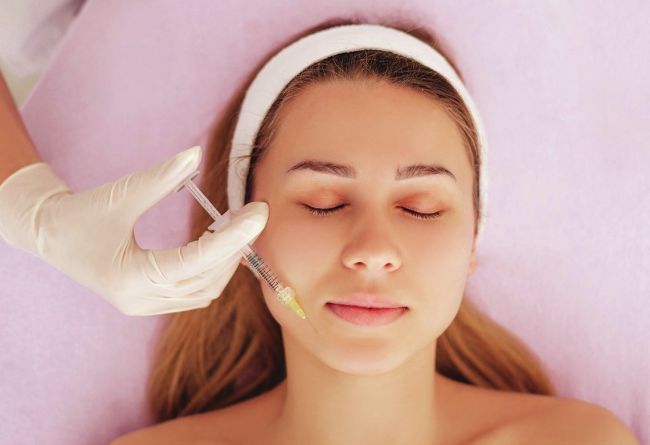
Botulinum toxin type A (BoNT-A) produces temporary chemodenervation of targeted muscles and has become a cornerstone of aesthetic medicine. Its ability to selectively inhibit facial movement offers a unique opportunity to examine the role of facial expression in emotional regulation. Over the past decade, a growing body of literature has explored the psychological effects of BoNT-A, particularly in the glabellar region, where treatment has been associated with reductions in depressive symptoms. These findings have been interpreted as supporting the facial feedback hypothesis, suggesting that attenuation of negative expressions may reduce negative affect.
However, the emotional consequences of inhibiting other regions of the face, particularly the lower face, remain insufficiently explored. The lower face plays a central role in positive emotional expression and interpersonal signalling. Its impairment may have adverse psychological consequences.
This review was further informed by a clinical observation arising from aesthetic practice. A patient undergoing repeated lower facial botulinum toxin type A treatments reported transient anxiety symptoms following each treatment. These symptoms were consistent in pattern and severity across multiple treatment cycles, emerging shortly after administration and resolving gradually over several weeks, broadly corresponding with the pharmacodynamic duration of botulinum toxin type A activity.
While this observation is anecdotal and cannot establish causality, the reproducibility of symptoms within the same individual across treatment cycles, together with their temporal association with treatment duration, suggests a physiological contribution rather than a solely situational or expectation-driven response. No concurrent psychosocial or medical changes were identified to account for the pattern.
The review is motivated by both theoretical considerations and observations, with the aim of evaluating whether disruption of lower facial expressivity may influence anxiety.
METHODS
A focused literature search was undertaken using PubMed-indexed sources and publisher-hosted full texts identified through search terms combining botulinum toxin, onabotulinumtoxinA, glabellar, lower face, facial feedback, depression, anxiety, amygdala, facial palsy, Bell’s palsy, stroke and emotion recognition. Priority was given to studies and reviews published from 2020 to 2025; earlier placebo-controlled RCTs were retained where they constituted the direct evidence base.
Eligible papers included placebo-controlled trials, pilot clinical studies, neuroimaging or experimental studies, systematic reviews and comparative studies in acquired facial paralysis. Studies were excluded if they dealt exclusively with technical injection outcomes without mood or emotion endpoints, or addressed unrelated non-facial indications of BoNT-A. Owing to heterogeneity in populations, treated regions and outcome measures, formal quantitative pooling was not undertaken. The review is therefore best understood as a structured systematic review with narrative synthesis.
DIRECT BONT-A EVIDENCE
The most robust direct evidence concerns glabellar BoNT-Ain depression. A 2020 systematic review and meta-analysis of five placebo-controlled RCTs involving 417 participants found a significant improvement in depressive symptoms favouring BoNT-A over placebo, with generally mild and transient adverse events. Across these studies, treatment was delivered to the glabellar complex rather than the lower face, supporting a mood effect of upper-face chemodenervation but not lower-face effect. Brin et al. (2020), a phase 2 double-blind trial in adult females with major depressive disorder, demonstrated that outcomes may be sensitive to dose, region and expectation effects, with the 30 unit arm outperforming the 50 unit arm. Subsequent reviews in 2021, 2024 and 2025 concluded that glabellar BoNT-A is promising as an adjunctive treatment for depressive symptoms, while emphasising methodological limitations and expectation effects.For anxiety specifically, direct evidence is sparse. A 2024 pilot study in a cosmetic patient population reported a significant reduction in GAD-7 scores following glabellar BoNT-A among participants with baseline clinical anxiety, although this was not a randomised study and did not examine the lower face. No post-2020 RCTs directly evaluating lower-face BoNT-A for anxiety, panic or emotional blunting were identified.
MECHANISTIC EVIDENCE
Recent mechanistic literature strengthens the argument that facial chemodenervation is not emotionally neutral. A 2023 neuroimaging study found that preventing frowning with onabotulinumtoxinA altered amygdala and fusiform gyrus activity during emotional face processing, supporting a facial-feedback account of emotion. Modulation was observed for both angry and happy faces, indicating that chemodenervation may alter processing of both negative and positive affective signals.
A 2024 systematic review of botulinum toxin injections for psychiatric disorders reached a similar conclusion, highlighting a shortage of biomarker and mechanism-focused work despite consistent clinical findings and the continued dominance of glabellar treatment targets.
FACIAL PALSY AND STROKE-RELATED FACIAL PARESIS
Analogy evidence from acquired facial paralysis is clinically important because it models the psychosocial consequences of reduced facial expressivity. Systematic reviews have consistently found that peripheral facial palsy is associated with reduced quality of life, social avoidance, anxiety, low mood and appearance-related distress. A 2021 meta-analysis further showed that clinician-graded severity correlates only modestly with patient-reported quality of life, indicating that psychosocial burden is not explained by motor impairment alone. Recent studies reinforce this association. Patients with facial paralysis are at increased risk of anxiety, depression and disrupted social interaction, with cohort data demonstrating high rates of psychological distress within the first year after diagnosis. Stroke-related facial paresis provides a further analogy. Patients with central facial paresis perform worse on facial emotion recognition than patients without paresis and healthy controls, supporting the idea that impaired facial motor output can disrupt emotional perception and expression. Although stroke is more complex than cosmetic denervation, the direction of effect remains instructive: diminished facial motor function can impair communication and coincide with emotional morbidity.
SYNTHESIS AND INTERPRETATION
The evidence assembled supports a region-specific interpretation. In the upper face, glabellar BoNT-A appears capable of reducing depressive symptoms by dampening negative facial feedback. In the lower face, the balance may differ because the muscles involved contribute more to smiling, warmth and speech-related expressivity. Lower-face denervation could reduce positive embodied feedback, interfere with social mirroring, increase self-monitoring and create a mismatch between felt emotion and visible expression. Such a mismatch may be particularly relevant to anxiety. If lower-face movement is restricted, patients may feel less able to recognise safety cues in themselves and others. The facial palsy literature suggests that when expressivity is compromised, patients may experience misunderstanding, isolation and reduced confidence, which may intensify anxiety. This does not prove that lower-face BoNT-Acauses panic, but it establishes a plausible biopsychosocial pathway by which treatment could influence emotional regulation.
DISCUSSION
This review does not support a simplistic claim that lower-face botulinum toxin treatments cause anxiety. The evidence suggests that facial muscle activity is involved in emotional processing, that BoNT-A can modify mood-related outcomes, and that loss of facial expressivity is associated with psychosocial harm. At the same time, direct clinical evidence for anxiety remains limited and regionally narrow.
For aesthetic medicine, facial regions are not interchangeable in psychological meaning. A treatment that is beneficial in the glabellar complex cannot be assumed to have the same effect in the lower face. The lower face carries high interpersonal salience, and over-treatment may alter the patient’s sense of expressivity, social ease and authenticity. This is relevant in patients with pre-existing anxiety or high reliance on expressive communication.
The literature also reinforces the need for consultation language that includes functional and emotional considerations. Patients are often counselled about asymmetry, oral competence and speech changes, but less often about potential effects on expressivity, confidence or social comfort.
CLINICAL IMPLICATIONS
Lower-face BoNT-A should be approached conservatively and individualised carefully. Consultation should include emotional expectations, communication style and any history of anxiety or mood disorder. Where concern exists, smaller test doses, staged treatment or avoidance of smile-critical muscles may be appropriate. Patients should be advised to report changes in smiling or social interaction at follow-up.
This perspective does not undermine the therapeutic value of BoNT-A but reframes best practice.
LIMITATIONS
The central limitation is the absence of direct lower-face RCTs examining anxiety or panic outcomes. Much of the inferential weight comes from adjacent literatures rather than definitive interventional evidence. Facial palsy and stroke analogies are informative but not equivalent to cosmetic chemodenervation. Expectation effects, cosmetic satisfaction and social context may also influence mood outcomes and are incompletely addressed in the current literature.
CONCLUSION
Current evidence supports a credible hypothesis that lower-face BoNT-A may influence emotional regulation differently from glabellar treatment due to its impact on muscles central to smiling and social signalling. Direct proof is not yet available, but converging evidence from clinical, mechanistic and analogy studies makes this an important area for further research and a relevant consideration in aesthetic practice.
Scan for references:
TRACEY DENNISON
Tracey Dennison is the consultant nurse practitioner at East Riding Aesthetics and Wellness, specialising in restorative and regenerative medical aesthetic treatments to give natural-looking, confidence-boosting enhancements. She has been nursing for over 30 years and is the Aesthetic Medicine Awards’ Nurse of the Year 2023.