BUSINESS
MODERN MAN
Reena Sandhu explores why male aesthetics is moving firmly into the mainstream and what clinics must understand about the modern male patient to meet rising demand
Male aesthetics is no longer a niche add-on for clinics. As more men seek subtle, low downtime treatments that help them look fresher rather than different, the opportunity is growing, but so is the need for the right consultation style, language, and clinical approach.
Not so long ago, male aesthetics was still spoken about as a side trend within the wider market, visible, growing, but not always approached strategically. That now feels out of date. More men are entering the category, and they are doing so with clearer intent: not to look dramatically different, but to look well, feel more confident and maintain their appearance in a way that feels discreet and manageable.
UNDERSTANDING THE MALE MINDSET
In February 2025, the American Academy of Facial Plastic and Reconstructive Surgery (AAFRS) reported that 92% of its surgeons see male patients in their practices, with blepharoplasty, rhinoplasty and facelifts among the most common surgical procedures for men.1
What makes this shift commercially interesting is not just the number of male patients, but the way demand is presenting. This is less about dramatic transformation and more about subtle, low downtime treatments that fit around work, family life and social visibility.
For many men, the goal is simply to look less tired, slightly sharper, or more refreshed. That changes the conversation for clinics. It means the opportunity sits not in overtly gendered marketing, but in understanding the mindset behind the demand and responding to it in a way that feels relevant, natural, and easy to engage with. The AAFPRS also noted that minimally invasive procedures continue to dominate overall, with neurotoxins and fillers remaining routine treatments in facial plastic practice, reinforcing the wider move towards lighter touch aesthetic interventions.1
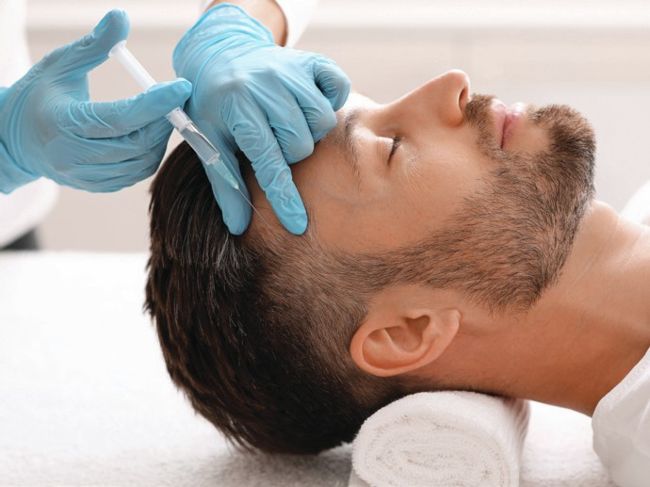
There are UK signals pointing in the same direction. In April 2025, the British Association of Aesthetic Plastic Surgeons (BAAPS) reported that although male cosmetic surgery overall dipped slightly in 2024, face and neck lifts among men rose by 26%.2 It is less about surgery specifically and more about what it signals: male patients are becoming more comfortable with rejuvenation as a longer-term investment rather than a one off fix.
Consumer insight adds another layer. In analysis published by Rare: Group in March 2025, 52% of men in the UK said improving self confidence was the most important factor in deciding to get treatment, while 23% agreed that their professional environment requires them to have a fresh appearance.3 Male patients are not just seeking treatment for vanity or novelty. Confidence, ageing, and workplace presence are all part of the picture, which means the consultation needs to go deeper than a surface-level request.
ADAPTING THE PATIENT JOURNEY
For clinics, this is where the real opportunity sits. If male aesthetics is becoming more mainstream, then the patient journey must evolve with it. A token men’s page on the website or a few stock images of male patients will not be enough. What matters more is the tone of voice, the consultation
style, and the overall sense of relevance. In practice, that often means leading with outcomes such as looking less tired, improving skin quality, softening signs of stress or maintaining a sharper overall appearance, rather than framing everything through overtly cosmetic language.
It also means recognising that discretion still matters. Many male patients may be open to treatment, but they still want the journey to feel straightforward, credible, and low pressure. Clinics that do this well will be the ones that normalise the conversation, educate clearly and build trust from the first interaction onwards. They will also understand that male aesthetics should not sit in isolation as a gimmick or a side category. It works best when it is part of a broader clinic proposition.
SUBTLE SUPPORT
Male aesthetics is not “coming soon;” it is already here, and it is becoming more. The clinics best placed to grow with it will be the ones that understand what is really driving demand: confidence, subtlety, relevance, and trust. Not louder messaging. Not tired stereotypes. Just a more thoughtful, credible approach to a patient group that is now very much part of the mainstream aesthetics conversation.
Scan for references:
REENA SANDHU
Reena Sandhu is a marketing leader with over a decade experience in aesthetics and skin health. A former entrepreneur and founder of a successful aesthetics marketing consultancy, later transitioned into senior leadership roles within the aesthetics industry.