DR NIMA MAHMOODI ON THE NEW AGE OF AESTHETICS
Kezia Parkins sat down with Dr Nima Mahmoodi to discover why psychedelics, spirituality, and nervous-system science may redefine longevity and the aesthetics clinic as we know it.
Dr Nima Mahmoodi wants it on record:psychedelic medicine will sit at the forefront of the longevity movement. In a landscape where “wellness” and longevity have became some of the most overused words of 2025, he argues the industry is only just beginning to understand the deeper mechanisms that govern health, ageing, beauty and human behaviour. For him, these mechanisms are inseparable from the mind, the nervous system, and even the spiritual frameworks through which individuals relate to themselves.
Some clinicians still flinch at the term psychedelics. Others dismiss the resurgence of spiritual wellness as fringe or performative. For Mahmoodi, co-founder of Remedi London, these ideas are neither fashionable add-ons nor aesthetic window dressing. They are the foundation on which he rebuilt both his personal life and professional purpose. And unlike many wellness trends, his perspective is not rooted in mysticism alone, but increasingly supported by emerging data, neurobiological models and clinical research.
Remedi, his London clinic, is widely described as one of the most distinctive hybrid concepts in the UK: equal parts aesthetics, integrative wellness, biohacking and spiritual therapeutics. It did not emerge from a business plan but from an existential turning point.
A PATH PRESCRIBED AND REWRITTEN
Growing up in a large Iranian family, Mahmoodi recalls high cultural expectations around success. “My whole life was pretty much set out for me,” he says. “I had to have status, wealth, recognition and a materialistic life if I wanted to be happy.”
He dutifully pursued dentistry, suppressing the persistent feeling that the profession was not his calling. Within a year, physical strain (particularly severe back problems) triggered a downward spiral. “I could barely walk and was in a very dark place, struggling to see a way forward.” Leaving dentistry felt like both a failure and a relief, but aesthetic medicine quickly provided a more natural fit. He built six concessions of his aesthetic brand in the premium fitness chain David Lloyd, including the late Princess Diana’s former Chelsea Harbour Club, and settled into a demanding but prosperous rhythm…Until the world shut down.
Lockdown abruptly stripped away the momentum that had defined him. “I went from working six or seven days a week to nothing,” he recalls. Faced with rare stillness, he finally confronted questions he had long avoided: Why am I doing this? Am I even happy? The answer was no.
The pause unearthed dormant interests, particularly spirituality, a thread woven into his family lineage. He also stumbled upon the television series Nine Perfect Strangers, which fictionalises a wellness retreat using psychedelics under the guise of transformation. The premise was exaggerated for drama, but for Mahmoodi, the themes struck a visceral chord with his own sense that aesthetics alone could not address the deeper human needs he was seeing in clinic.
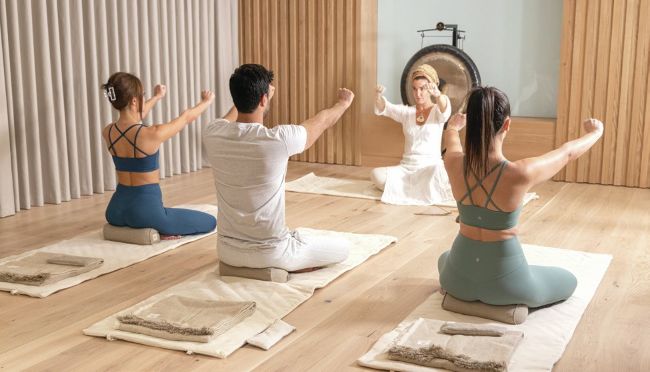
Remedi London’s Rebalance Impulse device and kundalini yoga.
A FIRST PSYCHEDELIC EXPERIENCE AND A PERSONAL DISMANTLING
Raised to believe that any drug use meant being “cut off” from family, he internalised prohibition so strongly that he once disowned a university friend for smoking cannabis. “I took it seriously. In my house it was made clear that if you take drugs you are out.”
So when he later encountered a psychedelic experience in an intentional, reflective setting after lockdown, it surprised even him. He describes feeling an overwhelming sense of gratitude and a rare emotional clarity after years of internal pressure. He texted his mother to tell her he loved her, something he describes as painfully difficult before that night. And he saw a vision of building “a clinic like no other” and living a life aligned with truth rather than expectation.
“I was amazed by how I was able to let go of ego, drop the mask and connect with people in a truly meaningful way. It was life-changing. I owe everything I have to this experience.”
As those insights began taking shape in his real life, his interest in psychedelic science intensified. Not in the recreational sense, but in understanding why a single experience could so profoundly recalibrate one’s emotional landscape.
THE BIRTH OF REMEDI
That shift illuminated something else: his disenchantment with the traditional aesthetics industry. “When I first got into it, like many, I was sucked in by the glitz and glamour. I was at all the fancy events posting my lifestyle on Instagram. But the truth is, I was miserable.”
He began to notice patterns in his consultations. Patients would come for injectables, but beneath the cosmetic request sat deeper emotional, psychological or existential concerns. “There was always something under the surface the patient needed help with.” His own spiritual exploration expanded his capacity to ask different questions, listen longer, and connect more deeply.
This recognition led to a radical conclusion: the aesthetic component was only one small fraction of what truly influences wellbeing—and therefore appearance. “The aesthetics alone no longer set my heart on fire, but this does,” he says.
Remedi emerged as the physical expression of that realignment. An integrative, first-in-class clinic blending clinical aesthetics, biohacking, emotional work, and spiritual practices under one roof. Co-founded with his close friend, nurse Yasmin Shirazi, it feels more sanctuary than clinic.
Today Remedi offers injectables but also cryotherapy, infrared therapy, neuromuscular relaxation, Emerald Laser, reiki, kundalini yoga, sound therapy, breathwork, and programmes addressing emotional trauma and chronic stress. The model intentionally collapses the artificial divide between external appearance and internal health.
But the journey wasn’t serene. A betrayal from a former business associate left him devastated. He carried resentment so heavy that it stalled the business emotionally. Around this time he was offered psilocybin therapy with a shaman.
The experience reframed his perspective. “It showed me the oneness of all of us… and helped me see that the person who hurt me was coming from a place of lack and fear.” He was finally able to release resentment, not from judgment but compassion. “That was a huge gift. It was literally stopping me from moving forward.”
GROWING RESEARCH: WHY PSYCHEDELICS MATTER FOR LONGEVITY
Mahmoodi is not alone in linking psychedelics, nervous-system health and longevity. The research landscape, while still evolving, is increasingly compelling.
Psilocybin has demonstrated significant effects on neural plasticity, enhancing synaptogenesis in both preclinical studies and human models. Studies from Johns Hopkins and Imperial College London show sustained decreases in depression and anxiety after psilocybin therapy – states closely linked to cortisol dysregulation and accelerated cellular ageing.
Chronic stress and trauma physiologically alter the nervous system, increasing inflammatory cytokines and impairing collagen synthesis. Mahmoodi references foundational work such as Bessel van der Kolk’s The Body Keeps the Score, which outlines how trauma imprints itself somatically.
Then there is early laboratory work that suggests psilocybin may support cellular function, including research indicating increased lifespan in certain cell models. Work that, while preliminary, hints at longevity applications.
For Mahmoodi, the mechanism is intuitive: “Most physical ailments are manifestations of something happening internally on a nervous system level. Chronic cortisol is detrimental to everything, including collagen production.”
Psychedelics, by facilitating emotional processing, reducing rumination, and easing somatic tension, may indirectly support the physiological pathways that govern ageing. Trauma, he notes, shows up in the face as tension, misalignment, and diminished vibrancy. The concept is echoed in psychodermatology research, demonstrating strong correlations between emotional states and skin disorders.
Sound therapy, breathwork and energy practices fit into this framework through vibrational and autonomic-nervous-system modulation. “Every emotion is a thought, and every thought has a physiological response,” he says. “If it helps you shift from fear, shame, guilt to more positive thinking, your physiology changes and so does how you look.”
A NEW MODEL OF CONSULTATION
Mahmoodi’s consultation style has evolved into what he calls a whole-life audit. Many patients arrive believing their concerns are purely skin-deep. But he begins by exploring diet, sleep, emotional states, stress exposure, hormonal patterns and lifestyle rhythms.
“It’s so much more than applying a topical cream or doing radiofrequency microneedling. We go through every part of their life.” Before meeting the patient, he reviews a wellness intake and then guides them through education: how acne might relate to hormones or stress; how cortisol triggers inflammatory breakouts; why fatigue or low mood might be biochemical rather than cosmetic.
Then often a treatment plan will be formed from Remedi’s biohacking suite. Emerald Laser may be prescribed which originally used for fat reduction, also increases cellular ATP by up to 400%, supporting energy metabolism. Meanwhile, cryotherapy which also has metabolic benefits also elevates dopamine by approximately 250%, which can counter cortisol’s damaging effects. Here, aesthetics becomes not the goal but a portal… Patients who arrive seeking physical change often rediscover emotional clarity, behavioural shifts, or a renewed relationship with their body. This, he says, is why he continues to work in aesthetics despite frequent tension with the industry’s priorities. “I realised the people who come to me are the ones who need me the most. They come with a want, and I can gently elevate them to think about what they truly need internally.”
THE CONCERNS: A WELLNESS WILD WEST
Mahmoodi is the first to admit the expanding landscape brings risks. “It’s the Wild West,” he says of the psychedelic space. “Some people do it once and call themselves enlightened or shamans. It’s worrying. It’s also worrying when people can’t help you integrate afterwards.” Set, setting and intention are essential, he insists, and poor facilitation can do harm.
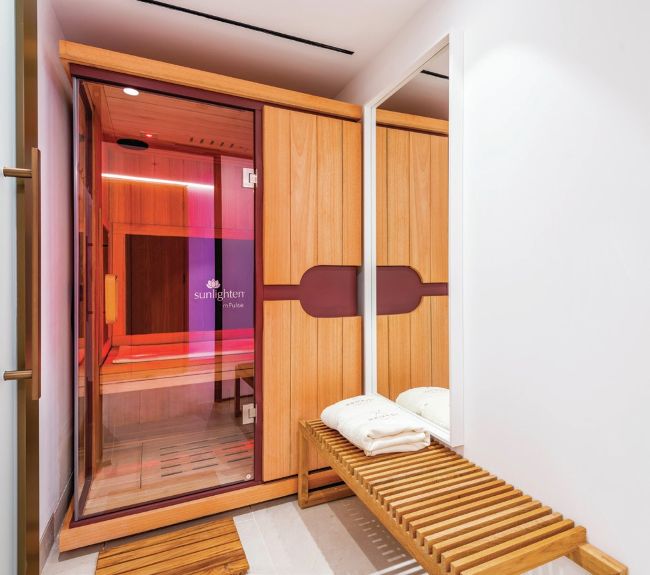
Remedi’s infrared sauna and tranquil reception.
His hope is that medicalisation and thoughtful regulation will bring safety, standards and accessibility. He is confident legalisation is approaching in the near future and envisions retreats, clinics and wellness hotels built around evidence-based psychedelic therapy. He has even discussed these ideas with entrepreneurs such as Richard Branson while developing his own retreat concept, Sanctum.
To ensure that he does not add to the noise of this wellness wild west, last year he completed a PG Cert in psychedelic treatment and next year he will look to complete a masters. This will enable him to provide safe guided experiences for his patients in the future.
THE CENTRALITY OF NERVOUS-SYSTEM REGULATION
Where he sees the industry urgently needing to evolve is in its understanding of the nervous system. “It is the most important thing,” he says. “You can have your 20-step supplement protocol and an incredible diet, but if your nervous system is dysregulated, you’re building a foundation on sand.”
Indeed, decades of research link chronic sympathetic activation to accelerated biological ageing, impaired immunity, reduced sleep quality, and decreased collagen regeneration. Interventions that support parasympathetic dominance, from breathwork to cold therapy to psychedelic-assisted therapy, are increasingly recognised as longevity-modulating.
“The nervous system runs everything. It affects your sleep, stress levels… even your decision-making processes. It is the ultimate key to longevity.”
LOOKING FORWARD
Mahmoodi encounters mixed reactions to his philosophy. “Some people think I’m a genius, others think I’m barking mad,” he says with a smile. But he is unmoved. “This is something I’ve been doing since 2020. Now wellness and longevity are the biggest buzzwords in the industry.”
What differentiates Remedi is not its offerings but its ethos: a sincere, lived integration of clinical science, spiritual practice and emotional inquiry. For Mahmoodi, the future of aesthetics is not simply about lifting the face but lifting consciousness and ensuring the internal landscape matches the external one patients seek to refine.
His compass is simple: love, authenticity and truth. And in an industry long governed by image, those principles might just be the most transformative of all.