CASE STUDY
TREATING PERSISTENT ERYTHEMA FOLLOWING A FRACTIONAL CO² LASER COMPLICATION
A staged approach to persistent facial erythema following a severe infection after fractional CO₂ resurfacing.
PATIENT PROFILE
Age: Early 30s
Skin type: Fitzpatrick II/III
Presenting concern: Persistent facial erythema and flushing following fractional CO₂ laser resurfacing complicated by severe infection
Previous treatment: Fractional CO₂ resurfacing; subsequent hospital treatment with intravenous antibiotics
Treatment undertaken: Two Profhilo treatments followed by two Moveo VL treatments
Moveo VL parameters: 20 J/cm², long pulse mode, accumulated energy 4000 J/100 cm² Treatment interval: Four weeks between Moveo VL sessions
DR FAB EQUIZI
Dr Fab Equizi qualified from the University of Liverpool Medical School in 1988 and has specialised in medical aesthetics since 2000. He holds a Diploma in Non-Surgical Facial Aesthetics with distinction from UCLan and is a respected international educator, speaker and mentor. As medical director of Enhance Clinispa, he is a regular contributor to professional journals and is committed to advancing clinical excellence, evidence-based practice and patient safety in aesthetic medicine.
Facial redness is highly visible and can be difficult to conceal. As the face is central to social interaction and communication, persistent erythema can have a disproportionate impact on self-confidence, emotional wellbeing and quality of life. Patients frequently report embarrassment, reduced self-esteem, avoidance of social situations and anxiety surrounding flare-ups, making successful treatment important not only from a cosmetic perspective but also for psychological wellbeing.1
Post-inflammatory erythema (PIE) describes persistent erythema that can remain following cutaneous inflammation. It is most commonly discussed as a sequela of inflammatory acne and is thought to result from inflammatory cytokine activity, dilation of the superficial dermal microvasculature and increased vascularity within the affected tissue. Although commonly associated with acne, persistent erythema may also occur following other forms of cutaneous inflammation or trauma. Mild erythema may gradually resolve spontaneously over time; however, more persistent or clinically significant cases may benefit from targeted intervention, including vascular laser and light-based therapies.2-4
Vascular laser and light-based technologies may be considered where post-inflammatory erythema persists. In this case, Moveo VL was selected because its in-motion delivery allows energy to be progressively accumulated across the treatment area while sapphire contact cooling provides continuous epidermal cooling. This was considered particularly appropriate in a patient whose skin had previously undergone significant inflammatory and iatrogenic trauma.
PATIENT PRESENTATION
In this case, the patient (LL), a woman in her early thirties (Fitzpatrick skin type II/III) presented to Enhance Clinispa approximately three months after fractional CO2 laser resurfacing performed elsewhere. The post-procedure course was complicated by a severe facial infection requiring hospital admission and intravenous antibiotics.
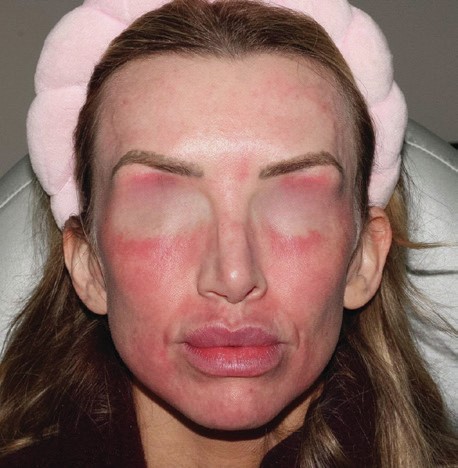
Fig 1. Pictures show severe skin infection following fractional ablative CO2 laser treatment performed elsewhere.
Although the infection resolved completely, persistent diffuse facial erythema and marked flushing remained, causing considerable psychological distress and affecting her confidence. Clinical examination demonstrated stable post-inflammatory vascular erythema with no evidence of ongoing infection or active inflammation.
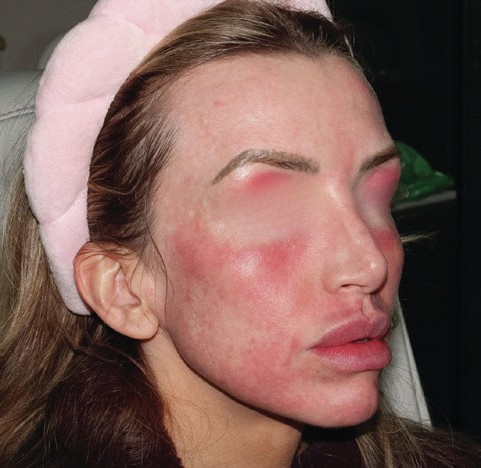
Fig 2. Pictures show persistent post-inflammatory erythema approximately three months after initial CO2 and infection.
TREATMENT RATIONALE
Following a thorough consultation and discussion regarding realistic expectations, a course of Profhilo and Moveo VL treatment was recommended.
Given the severity of the preceding inflammatory episode, treatment was approached conservatively. Although the active infection had resolved and there were no clinical signs of ongoing inflammation, the patient’s skin had undergone considerable trauma following both the original resurfacing procedure and subsequent infection. Immediate vascular laser treatment was therefore not considered the first priority.
The initial phase of treatment focused on improving hydration and supporting recovery of overall skin quality. Two Profhilo treatments were undertaken to improve dermal hydration and support tissue recovery5 before introducing Moveo VL. Once the skin appeared clinically stable, treatment was then directed towards the persistent vascular component responsible for the background erythema and flushing.
TREATMENT PROTOCOL
Prior to Moveo VL treatment, the skin was cleansed and a clear ultrasound gel applied to improve optical coupling between the sapphire tip and the skin.
Treatment was performed using continuous in-motion movements over each affected area with overlapping passes. Rather than targeting individual vessels, the treatment aimed to gradually raise the temperature of the superficial vascular network. Treatment continued until the appropriate clinical endpoint of mild, uniform treatment erythema was observed. Continuous sapphire contact cooling maintained epidermal protection throughout the procedure whilst also improving patient comfort.
The patient underwent two treatment sessions, four weeks apart.
Clinical photographs were obtained before the initial treatment and at follow-up.
The parameters used were a fluence of 20J/cm2, long pulse mode and an accumulated energy of 4000J/100cm2.
OUTCOME
At review, the patient demonstrated a visible reduction in background erythema and flushing episodes together with improvement in overall skin tone. The improvement was also meaningful to the patient, who reported increased confidence and a reduction in the frequency and intensity of flushing. The treatment was well tolerated throughout, with minimal discomfort and only transient post-treatment erythema resolving within several hours.
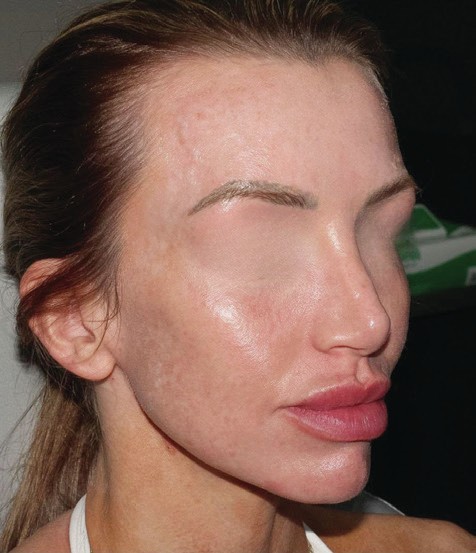
Fig 3. Pictures show reduction in persistent post-inflammatory erythema before (left) and after (right) two Moveo VL “in-motion” treatments.
PATIENT PERSPECTIVE
“When this first happened it was horrific, I genuinely didn’t know what the long-term outcome would be or whether my face would ever feel like mine again. It affected me far more than just physically – my confidence completely disappeared, I didn’t want to leave the house and there were moments where I honestly wondered whether I would ever look in the mirror and feel like myself again.
“Looking at my skin now, the difference is unbelievable. I never ever imagined I would get to this point, and seeing how far I’ve come still makes me emotional. I’m so incredibly grateful to Nik and Fab for their expertise, reassurance and most importantly, how quickly they responded when I needed help. I truly believe that their early intervention, knowledge and continued care has completely changed the outcome. They helped me through one of the most frightening experiences I’ve ever had, and they’ve given me back a level of confidence I honestly thought I might have lost for good.
“Thank you so much I’ll be forever grateful.”
DISCUSSION
Post-inflammatory erythema is most frequently discussed in association with inflammatory acne; however, persistent vascular change may also follow other forms of cutaneous inflammation and trauma. In this patient, both the initial ablative laser treatment and subsequent severe infection are likely to have contributed to a prolonged inflammatory response and persistent superficial vascular change.
A key consideration was therefore the timing of intervention. Vascular treatment was undertaken only once the infection had fully resolved and the skin was considered clinically stable. A staged treatment strategy was adopted, initially focusing on skin quality and hydration before addressing the residual erythema with Moveo VL.
The diffuse nature of the patient’s redness was considered well suited to an in-motion approach, as treatment could be delivered across the affected vascular network rather than targeting individual visible vessels. Following two sessions, a marked visible improvement was observed with minimal downtime. Although the outcome in this case was encouraging, it represents an individual clinical experience and further prospective investigation is required to establish the role of this approach in post-inflammatory erythema following procedural complications.
CONCLUSION
This case demonstrates the successful management of persistent post-inflammatory erythema following a significant laser-related complication. Following complete resolution of the infection and a period focused on restoring skin quality, two Moveo VL treatments produced a visible reduction in diffuse erythema and flushing with minimal discomfort and downtime.
Importantly, the case highlights the value of a staged and cautious approach when treating skin that has previously undergone significant inflammatory trauma. Careful patient assessment, complete resolution of active infection or inflammation and realistic treatment expectations remain essential. While further research is required, this case suggests that in-motion vascular
Scan for refe laser treatment may provide a useful option for selected patients presenting with persistent post-inflammatory erythema.
This article was written by Dr Fab Equizi, Nichola Hulbert and Rhiannon Smith.
Scan for references: